If you are weighing up a career change, here is the answer before the detail.
| The short answer Employed stylist roles in the UK pay roughly 20,000 to 31,000 pounds a year, and that is the number every salary website will show you. It is not the number that applies to a self-employed personal stylist with her own client book. Working personal stylists in the UK publish rates of roughly 85 to 170 pounds an hour, 340 to 575 pounds for a half day and 795 to 1,020 pounds for a full day. Retainers start around 1,500 pounds a month.The gap between those two numbers is not talent. It is which of the two jobs you are actually doing. |
Why the salary figures you find are the wrong ones
Search for what a stylist earns and you will land on Glassdoor, Payscale, Indeed or Prospects. Those sites are measuring employed roles: the stylist on a department store floor, the assistant on an editorial shoot, the junior in a styling agency. That is a real job, and it pays what those sites say it pays.
It is not the job most people retrain for. A self-employed personal stylist sells sessions and packages to private clients. Different work, different clients, different economics, same word on the tin.
Here is what the salary sites actually say, with the caveats that rarely get quoted alongside them.
| Source | Figure | What it measures | Date of data |
|---|---|---|---|
| Prospects | 18,000 to 20,000 pounds junior; 23,000 to 30,000 pounds senior | Employed stylist roles | July 2025 |
| Prospects | 50 to 150 pounds a day, or 11 to 15 pounds an hour | Freelance assistant stylists | July 2025 |
| Glassdoor | 26,261 pounds average total pay; 20,000 to 31,000 pounds base | Self-reported employed personal stylist roles, 50 submissions | Submissions dated 2024 to Nov 2025 |
| Payscale | 9.29 pounds an hour, 7.86 to 12.21 pounds range | Six salary profiles | Last updated August 2020 |
Look at the Payscale row twice. That page presents 9.29 pounds an hour as a 2026 figure. The underlying data was last updated in August 2020 and is drawn from six people. It is one of the most widely repeated numbers about this profession and it is close to meaningless. Treat the whole category with suspicion: small samples, employed roles, and refresh dates that are years behind the label on the page.
What established personal stylists actually charge
This half of the question is easier to answer honestly, because working stylists publish their prices. These are live UK price lists, not estimates.
| Stylist | Service | Published price |
|---|---|---|
| Charlotte Stather | Personal styling, hourly | 85 pounds an hour |
| Styled by ID (London) | Real-time edit, 1 hour | 125 pounds |
| Styled by ID (London) | Express edit, 2 hours | 375 pounds |
| Styled by ID (London) | Capsule edit, 4 hours | 575 pounds |
| Styled by ID (London) | Full day edit, 6 hours | 795 pounds |
| Styled by ID (London) | Private client retainer | From 1,500 pounds a month |
| Fig and Frost | Additional hours | 170 pounds an hour |
| Fig and Frost | Personal shopping, express, 2 hours | 340 pounds |
| Fig and Frost | Wardrobe workout, half day | 510 pounds |
| Fig and Frost | Wardrobe workout, full day | 1,020 pounds |
| Fig and Frost | Colour consultation, 2 hours | 340 pounds |
Two things to take from that table. First, the spread is wide: 85 pounds an hour and 170 pounds an hour are both real UK rates, and the difference is positioning rather than skill. Second, almost nobody sells hours. They sell a named session with a fixed price and a fixed length, which is why the half day and full day rates cluster so tightly.
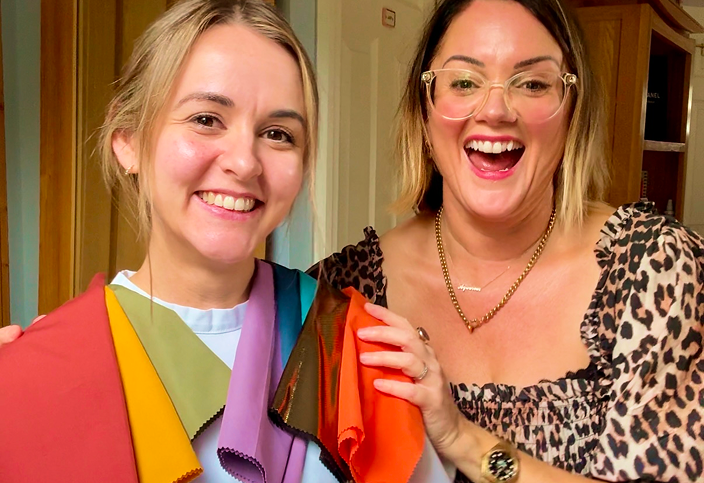
Colour analysis is worth singling out. It is a two hour session at 340 pounds on the price list above, it needs no shopping trip and no wardrobe access, and it is the service most stylists use to open a client relationship. It is the cheapest thing to add to your offer and the fastest to deliver.
What that turns into over a month
Published rates are not income. Here is the arithmetic, with the assumptions written out so you can change them.
Assume a stylist two years in, charging 510 pounds for a half day session, seeing clients two days a week and running two sessions on each of those days. That is 16 sessions a month with the diary full, and it leaves three working days a week for everything that is not client-facing.
| Scenario | Sessions a month | Gross a month | Gross a year |
|---|---|---|---|
| Building, part time | 4 | 2,040 pounds | 24,480 pounds |
| Established, part time | 8 | 4,080 pounds | 48,960 pounds |
| Established, near capacity | 16 | 8,160 pounds | 97,920 pounds |
These are gross figures and they assume the diary is full. They are arithmetic, not a forecast. Out of them come tax, national insurance, insurance, travel, subscriptions, marketing and the unpaid hours spent finding the next client. Most stylists do not run at capacity in their first two years, and the first year is usually closer to the top row than the bottom one.
But notice what the middle row does. Eight half day sessions a month, which is two a week, beats the average employed salary on every one of those salary databases. That is the honest version of the answer: the ceiling is much higher than the salary sites suggest, and the floor is much lower, because nobody pays you when the diary is empty.
What actually moves you up the range
From the price lists above and from what stylists consistently report, four things separate the 85 pounds an hour end from the 170 pounds an hour end.
Packages instead of hours. Every stylist at the top of that table sells a named, fixed-price session. Selling hours caps you at your hourly rate and invites negotiation. Selling a defined outcome does not.
More than one service. A colour consultation leads to a wardrobe edit, which leads to personal shopping, which leads to a seasonal retainer. One client buying three services is worth more than three clients buying one, and costs far less to find.
Male clients. Most personal stylists market almost exclusively to women, and then turn down the men who enquire. Men’s styling is a smaller market with far fewer stylists serving it, and the ones who do serve it rarely compete on price.
Being findable. A published price list, a real portfolio and visible client reviews are what convert an enquiry into a booking. The stylists quoted in this article all publish their prices openly. That is not a coincidence.
Do you need a qualification to charge?

Legally, no. Personal styling is not a regulated profession in the UK and nobody will stop you taking a paying client tomorrow.
Practically, training does three things that matter to the numbers above. It gives you a method, so you are not improvising in front of someone who has paid you 510 pounds. It gives you the business side, which is where most new stylists actually fail. And it gives you an accreditation and a portfolio to put in front of a client who is deciding between you and someone else.
What you do not need is a three year degree. The recognised route into paid client work is a specialist accredited diploma, measured in weeks rather than years.
Where to train
If you want to reach the rates in this article, you need a course that teaches the client work and the business that surrounds it. These are the options at London College of Style, which trains personal stylists specifically for private client work rather than for editorial or retail roles.
| Course | Format | Length | Fee (inc. VAT) |
|---|---|---|---|
| Personal Styling Male Clients Advanced Diploma | Online | 4 weeks | 465 pounds |
| Personal Styling Female Clients Advanced Diploma | Online | 8 weeks | 1,215 pounds |
| Personal Styling Course London, Advanced Diploma | 1 week in London plus 6 weeks online mentoring | 7 weeks | 3,245 pounds |
| Fashion and Personal Styling Advanced Diploma | In person, Bloomsbury, 2.5 days a week | 6 weeks | 6,450 pounds |
All four are accredited by A.C.E. and all four can be paid in interest-free instalments. The male clients and female clients diplomas are the two that map most directly onto the services in the price table above, and they are designed to be taken in either order or together.
Course pages, with full syllabus and start dates:
- Personal Styling Male Clients Advanced Diploma, online (465 pounds, 4 weeks)
- Personal Styling Female Clients Advanced Diploma, online (1,215 pounds, 8 weeks)
- Personal Styling Course London, Advanced Diploma (3,245 pounds, 1 week in London plus 6 weeks mentoring)
- Fashion and Personal Styling Advanced Diploma, London (6,450 pounds, 6 weeks in person)
Other routes exist. University short courses at institutions such as University of the Arts London cover the creative side and are worth looking at if you want an academic route. Shorter independent courses are cheaper and quicker. The trade-off with both is how much client practice and business support you get, which is the part that determines whether you are charging 85 pounds an hour or 170.
Common questions
Can I do this part time while I keep my job?
Yes, and most people do at first. The middle row of the table above, eight half day sessions a month, is a part time diary. Client sessions are usually booked at weekends or in the evening precisely because clients are also working.
How long before I’m charging full rates?
Most stylists spend the first six to twelve months building a portfolio and a referral base, often at introductory prices. The rates in this article are what established stylists charge. Expect to start below them and raise your prices as your portfolio and reviews build.
Is 44 or 51 too old to retrain?
No, and it is frequently an advantage. Private styling clients are overwhelmingly adults with a career, a budget and a wardrobe problem. They tend to book someone who has lived a version of their life. This is a profession where being older reads as credibility rather than as a disadvantage.
What if I have no fashion industry background?
Most working personal stylists do not have one. The skills that matter are the ones you can be taught: colour, proportion, wardrobe strategy, how to run a shopping session, and how to run a business. Entry requirements for the diplomas above are being 18 or over and a good working level of English.
Do I need to live in London?
No. London rates are the highest in the country, but the price lists in this article include stylists working outside it, and online and virtual sessions are now a normal part of the job. Two of the four courses above are fully online for the same reason.
What are the costs I should budget for beyond the course?
Public liability and professional indemnity insurance, travel to client sessions, a website, a colour analysis kit if you offer that service, and the tax and national insurance on self-employed income. None of these are large individually. Budget for them from the first client rather than the tenth.
Are the salary websites ever useful?
For employed roles, yes. If you want a stylist job inside a retailer or an agency, Glassdoor and Prospects are a fair guide to what those roles pay. For self-employed client work they are measuring something else entirely.
Sources
Salary data: Prospects stylist job profile (July 2025); Glassdoor UK personal stylist salaries (submissions dated 2024 to November 2025); Payscale UK personal fashion stylist hourly rate (data last updated August 2020).
Published price lists, retrieved September 2026: Charlotte Stather; Styled by ID, London; Fig and Frost.
Course fees, formats and accreditations: London College of Style course pages, retrieved September 2026. Fees are inclusive of VAT and correct at the time of writing. Check the course page for current pricing and start dates.